
Back or pelvic girdle pain is a common complaint during pregnancy and can affect 1 in 5 women. Most women experience back pain at some point during pregnancy, usually in the later months. However, there are a few things you can do to minimize your back pain and concentrate on the arrival of your baby.
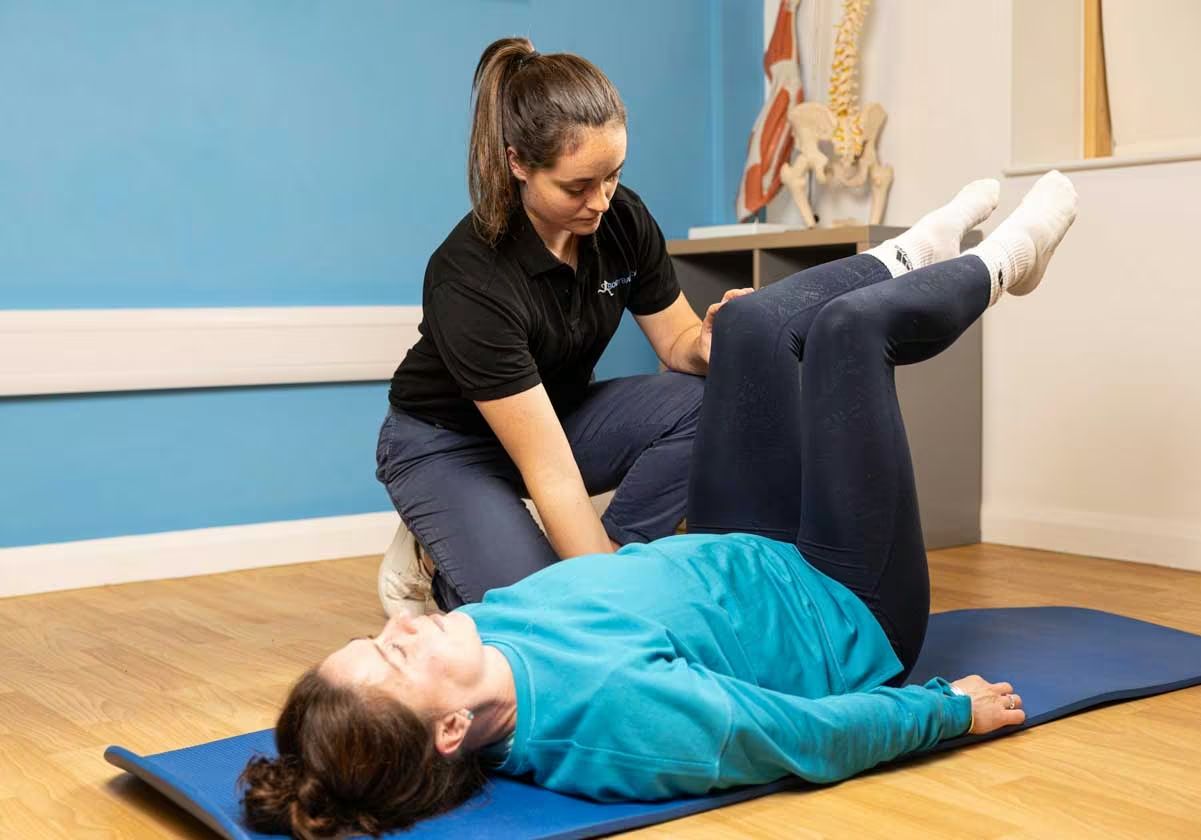
Back pain during pregnancy may be caused by a number of factors including hormonal changes, weak or lengthened muscles, weight gain, uneven load on joints, previous back pain and activity levels.
Hormonal changes in pregnancy can loosen the joints and ligaments making them softer and more elastic, in preparation for the birthing process. These changes can affect the strength or length of muscles, especially as the weight of the baby increases.
Your centre of gravity shifts as the baby grows, which causes your posture to change. The abdominal muscles become stretched and may weaken, which can lead to back pain. The pressure on the nerves or tissues can also cause radiating pain through the hips, buttocks, and legs.
If you are pregnant and experiencing back pain or pelvic pain, you may consult your doctor or midwife and discuss the options of physiotherapy for control of the pain. You may also consult a physiotherapist without a referral.
The physiotherapists at Bodybalance Physiotherapy are skilled and experienced in treating pregnancy-related back or pelvic pain. Commonly recommended therapies for managing pregnancy-related back pain include hot or cold therapy, gentle exercise, stretches, hands on treatment, general exercise advice and back care advice.
As the pregnancy progresses, a specifically designed physiotherapy program may be recommended to manage the discomfort at various stages of pregnancy. Specific pelvic–floor and lower back exercises also may be prescribed to reduce the pain and improve the strength.
Massage therapy can help relieve the discomfort of pregnancy-related back pain and also help with stress, tension, pregnancy-related anxieties and provide comfort to the expecting mother.
Call your doctor right away or attend A & E if you experience any of the following:
Some of our Physiotherapists have specialist skills and experience in treating musculoskeletal pain during pregnancy. An initial assessment can be done by our experienced and highly skilled physiotherapists to determine the best treatment.
Your treatment plan may include massage therapy, specific exercises, posture, stretches, advice, and other pain-relieving techniques.
You can also find information on POGP (Pelvic Obstetric and Gynecological Physiotherapy) website: https://thepogp.co.uk/patient_information/womens_health/pregnancy_pgp_lbp.aspx
or with this leaflet:
https://thepogp.co.uk/_userfiles/pages/files/POGP-PGP(Pat)(UL).pdf
We and our partners, including Google, use cookies and personal data to analyse traffic and for ads personalisation and measurement. You can accept, reject or choose which cookies to allow. Privacy Policy • Cookie Policy • Terms & Conditions • Google Privacy
We use cookies to help you navigate efficiently and perform certain functions. You can choose which categories to allow below. Cookies categorised as Necessary are always active.
We also use third-party cookies for analytics and advertising. These are only stored with your consent. You can update or withdraw consent at any time via the cookie icon at the bottom-left. This site operates under UK GDPR, the Data Protection Act 2018, and the Privacy and Electronic Communications Regulations (PECR). Cookie Policy • Privacy Policy
Necessary cookies are required for core site features including security, network management, and consent storage.
| Cookie | Duration | Description |
|---|---|---|
hmdg_cookie_consent | 180 days | Stores your cookie consent preferences. |
PHPSESSID | Session | WordPress session identifier. |
wordpress_logged_in_* | Session | WordPress login authentication. |
Functional cookies enable enhanced features such as live chat and remembering preferences.
| Cookie | Duration | Description |
|---|---|---|
wp-settings-* | 1 year | Stores user interface preferences. |
Analytics cookies help us understand visitor behaviour. Controls analytics_storage for Google Analytics 4.
| Cookie | Duration | Description |
|---|---|---|
_ga | 2 years | Google Analytics — distinguishes users. |
_ga_* | 2 years | Google Analytics 4 — session persistence. |
_gid | 24 hours | Google Analytics — distinguishes users. |
_gat | 1 minute | Google Analytics — throttles request rate. |
Performance cookies collect aggregate, anonymous data about site performance.
| Cookie | Duration | Description |
|---|---|---|
_gat_gtag_* | 1 minute | Google Tag Manager — rate throttle. |
Marketing cookies track visits to deliver relevant ads. Controls ad_storage, ad_user_data, and ad_personalization.
| Cookie | Duration | Description |
|---|---|---|
_gcl_au | 90 days | Google Ads — conversion tracking. |
_gcl_aw | 90 days | Google Ads — click attribution. |
_gac_* | 90 days | Google Ads — campaign information. |
IDE | 1 year | Google DoubleClick — ad targeting. |
Powered by HMDG • Cookie Policy