
A bone fracture is a medical condition in which a bone is cracked or broken. It is a break in the continuity of the bone. While many fractures are the result of high-force impact or stress, bone fractures can also occur because of certain medical conditions that weaken the bones, such as osteoporosis.
A fracture may be complete or partial and is commonly caused by trauma due to a fall, motor vehicle accident or sports injury. Thinning of the bone due to osteoporosis in the elderly can also cause bones to break easily. Overuse injuries are a common cause of stress fractures in athletes.
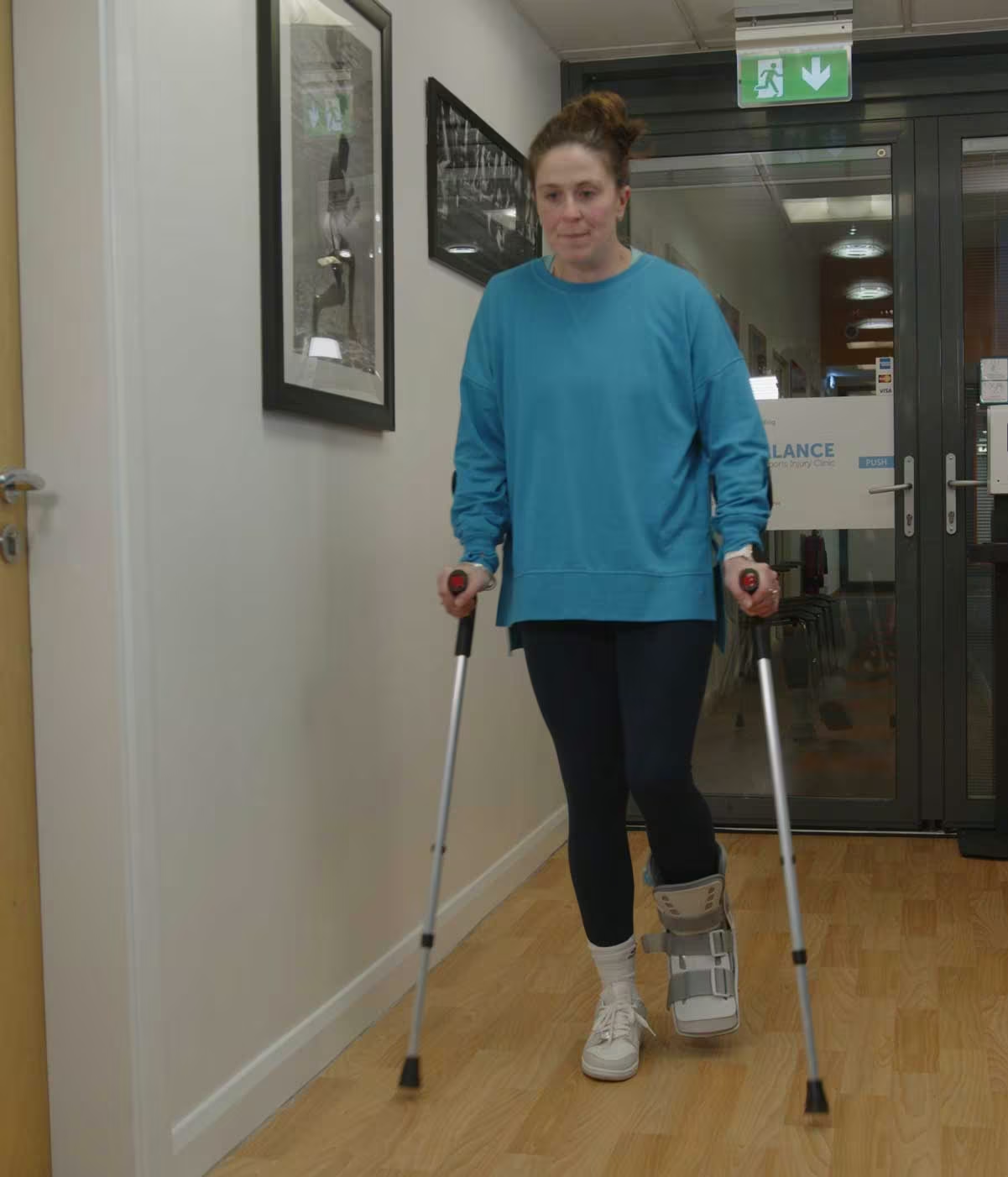
The objective of early fracture management is to control bleeding, prevent ischemic injury (bone death) and to remove sources of infection such as foreign bodies and dead tissues. The next step is the reduction of the fracture and its maintenance. It is important to ensure that the involved part of the body returns to its function after the fracture heals. To achieve this, fracture reduction and immobilisation are achieved by either a non-operative or surgical method.
Non-operative (closed) therapy uses casting and traction (skin and skeletal traction).
This method is used for fractures and dislocations that cannot be treated by casting. There are two methods of traction: skin traction and skeletal traction.
Skin traction involves attachment of traction tapes to the skin of the limb segment below the fracture. In skeletal traction, a pin is inserted through the bone and attached to ropes. Weights are applied, and the patient is placed in a traction apparatus. This method is commonly used for fractures of long bones.
Open Reduction and Internal Fixation (ORIF)
This is a surgical procedure in which the fracture site is exposed while a reduction of the fracture is done. Internal fixation is done with wires, plates, screws, and nails.
Fractures with infection or non-union (fails to heal)
Fractures may take several weeks to months to heal completely. You should limit your activities even after the removal of the cast or brace so the bone becomes solid enough to bear stress.
Once the fracture is healed, physiotherapy is important to address any residual joint stiffness, swelling, muscle weakness or wasting. Getting you back to your former level of fitness and ability will involve treatment consisting of hands-on treatment, exercises and advice tailored specifically to your individual needs.
We and our partners, including Google, use cookies and personal data to analyse traffic and for ads personalisation and measurement. You can accept, reject or choose which cookies to allow. Privacy Policy • Cookie Policy • Terms & Conditions • Google Privacy
We use cookies to help you navigate efficiently and perform certain functions. You can choose which categories to allow below. Cookies categorised as Necessary are always active.
We also use third-party cookies for analytics and advertising. These are only stored with your consent. You can update or withdraw consent at any time via the cookie icon at the bottom-left. This site operates under UK GDPR, the Data Protection Act 2018, and the Privacy and Electronic Communications Regulations (PECR). Cookie Policy • Privacy Policy
Necessary cookies are required for core site features including security, network management, and consent storage.
| Cookie | Duration | Description |
|---|---|---|
hmdg_cookie_consent | 180 days | Stores your cookie consent preferences. |
PHPSESSID | Session | WordPress session identifier. |
wordpress_logged_in_* | Session | WordPress login authentication. |
Functional cookies enable enhanced features such as live chat and remembering preferences.
| Cookie | Duration | Description |
|---|---|---|
wp-settings-* | 1 year | Stores user interface preferences. |
Analytics cookies help us understand visitor behaviour. Controls analytics_storage for Google Analytics 4.
| Cookie | Duration | Description |
|---|---|---|
_ga | 2 years | Google Analytics — distinguishes users. |
_ga_* | 2 years | Google Analytics 4 — session persistence. |
_gid | 24 hours | Google Analytics — distinguishes users. |
_gat | 1 minute | Google Analytics — throttles request rate. |
Performance cookies collect aggregate, anonymous data about site performance.
| Cookie | Duration | Description |
|---|---|---|
_gat_gtag_* | 1 minute | Google Tag Manager — rate throttle. |
Marketing cookies track visits to deliver relevant ads. Controls ad_storage, ad_user_data, and ad_personalization.
| Cookie | Duration | Description |
|---|---|---|
_gcl_au | 90 days | Google Ads — conversion tracking. |
_gcl_aw | 90 days | Google Ads — click attribution. |
_gac_* | 90 days | Google Ads — campaign information. |
IDE | 1 year | Google DoubleClick — ad targeting. |
Powered by HMDG • Cookie Policy