
Sports Medicine, also known as sports and exercise medicine (SEM), is a branch of medicine that deals with the treatment and prevention of sports and exercise-related injuries and improving fitness and performance. The main objective of sports medicine is to help individuals engage in sports and exercise in a safe and effective manner to accomplish their training goals.
A sports medicine team may comprise medical and non-medical specialists, such as physicians, surgeons, athletic trainers, physical therapists, sports psychologists, nutritionists, coaches, and personal trainers. Most sports medicine physicians deal with non-operative musculoskeletal conditions. Others are orthopaedic surgeons who have decided to focus their practice on the surgical treatment of sports injuries.
Sports medicine is not a medical speciality in itself. Most sports medicine doctors are certified in internal medicine, emergency medicine, family medicine, orthopaedics, or another speciality and then acquire additional training with a 2-year fellowship in sports medicine to be certified as a sports medicine specialist.
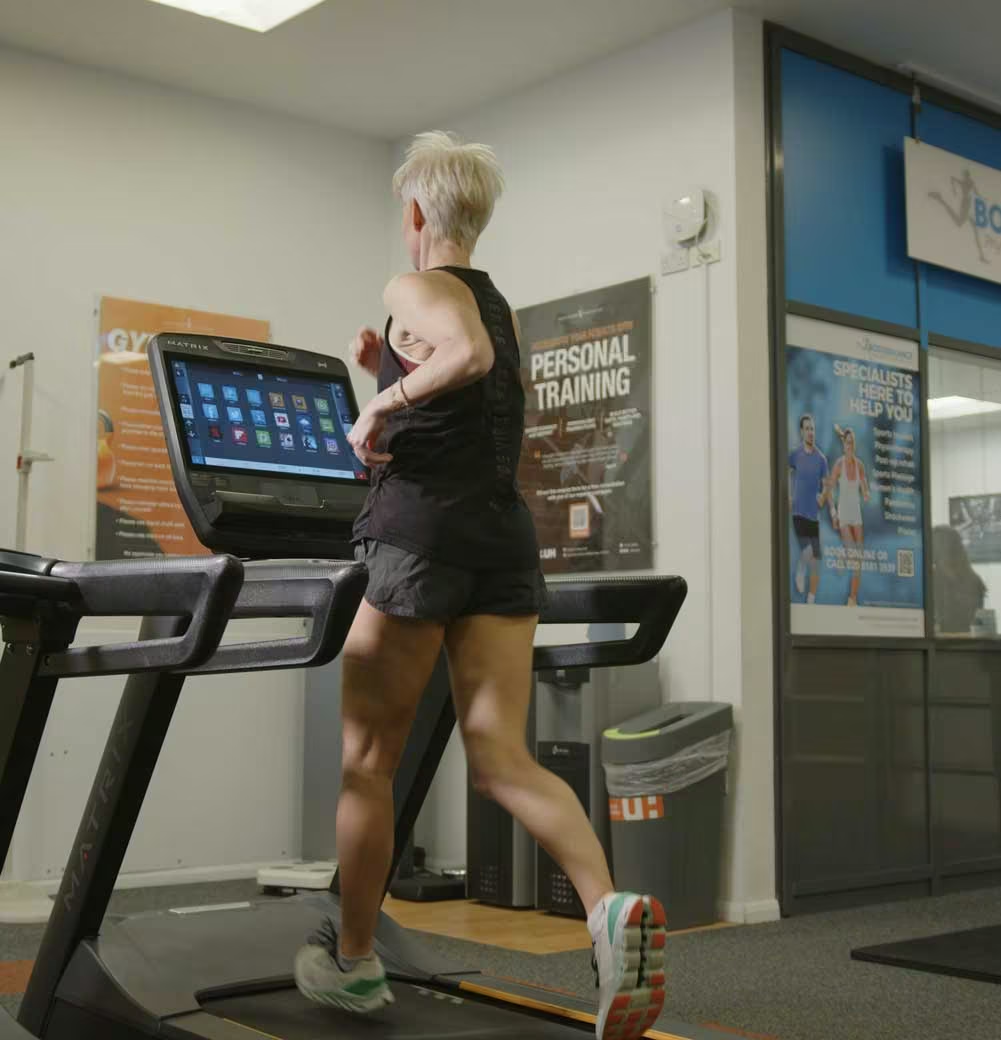
Sports medicine specialists are medical doctors who specialise in the diagnosis and treatment of sports- or exercise-related injuries and illness. A sports medicine specialist focuses on the medical, therapeutic, and functional aspects of exercise and works directly with athletes to improve their overall sports performance. Although sports medicine specialists work exclusively with athletes, the majority will treat anyone who needs treatment for a sports or exercise-related injury.
Sports medicine specialists treat a wide range of physical conditions, including acute traumas such as fractures, sprains, strains, and dislocations. They also treat chronic overuse injuries including tendonitis, degenerative diseases, and overtraining syndrome.
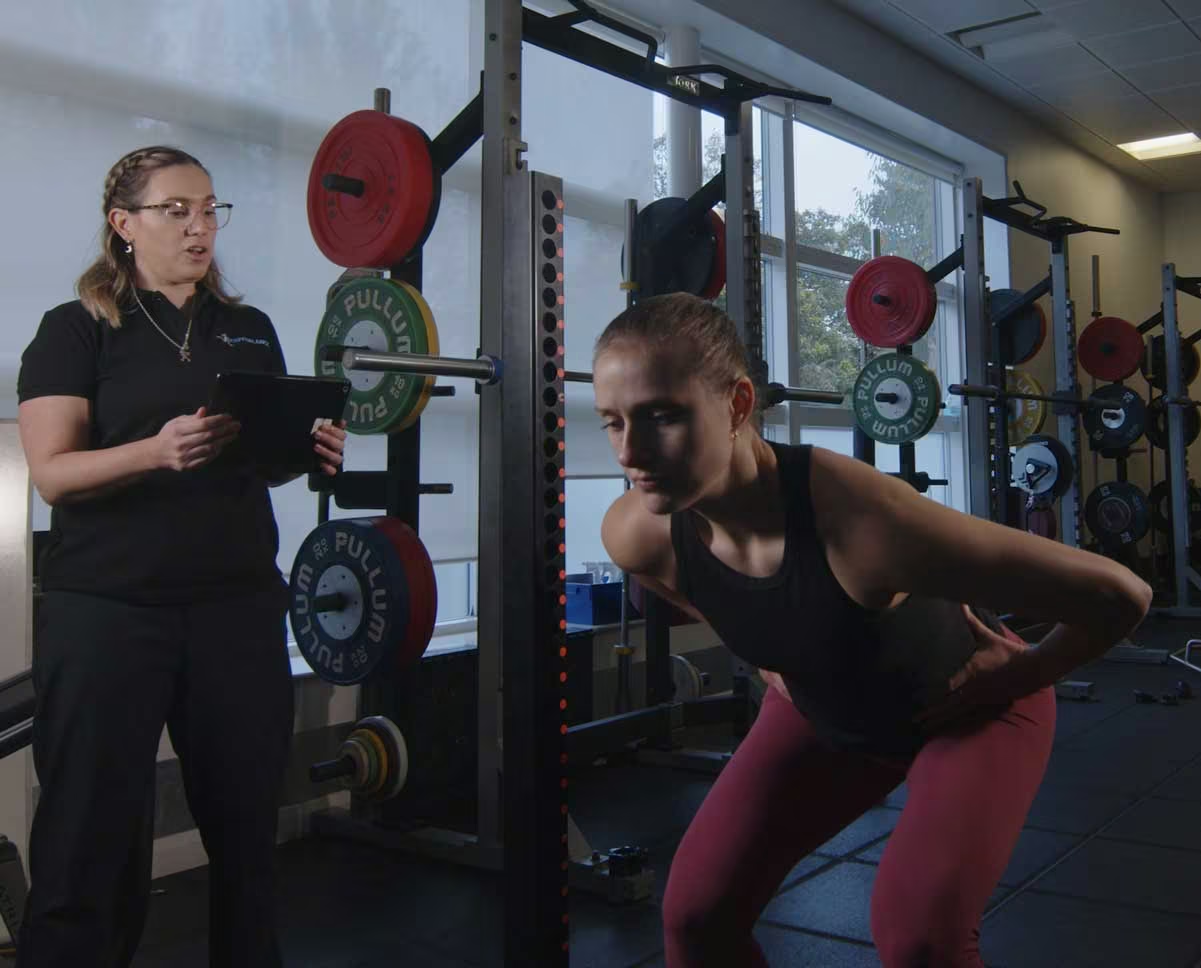
Sports injuries are injuries sustained while playing indoor or outdoor sports such as football, basketball, hockey, baseball, and tennis, or while exercising. Sports injuries can result from sports accidents, inadequate training, improper use of protective devices, or insufficient stretching or warm-up exercises. Common sports injuries include bone, muscle, ligament and tendon injuries that commonly involve joints such as the shoulders, knees, hips, ankles and feet.
Some of the common types of sports injuries treated by sports medicine specialists include:
Treatment includes management of bruises, strains and sprains, fractures, dislocations, chronic injuries, torn shoulder ligaments, ACL ligament repair in the knee as well as cartilage and meniscal repairs. Surgery is mostly accomplished by minimally invasive methods and healing is expedited by physical therapy and a rehabilitation program to ensure a quick return to your sporting activities.
The most common non-surgical or conservative treatment recommended for sports injuries include:
Surgical treatment is employed when an individual has sustained serious sports injury by means of a severe fracture, bone displacement, and soft tissue tears not amenable to conservative treatment.
Some of the common surgeries performed on athletes include:
We and our partners, including Google, use cookies and personal data to analyse traffic and for ads personalisation and measurement. You can accept, reject or choose which cookies to allow. Privacy Policy • Cookie Policy • Terms & Conditions • Google Privacy
We use cookies to help you navigate efficiently and perform certain functions. You can choose which categories to allow below. Cookies categorised as Necessary are always active.
We also use third-party cookies for analytics and advertising. These are only stored with your consent. You can update or withdraw consent at any time via the cookie icon at the bottom-left. This site operates under UK GDPR, the Data Protection Act 2018, and the Privacy and Electronic Communications Regulations (PECR). Cookie Policy • Privacy Policy
Necessary cookies are required for core site features including security, network management, and consent storage.
| Cookie | Duration | Description |
|---|---|---|
hmdg_cookie_consent | 180 days | Stores your cookie consent preferences. |
PHPSESSID | Session | WordPress session identifier. |
wordpress_logged_in_* | Session | WordPress login authentication. |
Functional cookies enable enhanced features such as live chat and remembering preferences.
| Cookie | Duration | Description |
|---|---|---|
wp-settings-* | 1 year | Stores user interface preferences. |
Analytics cookies help us understand visitor behaviour. Controls analytics_storage for Google Analytics 4.
| Cookie | Duration | Description |
|---|---|---|
_ga | 2 years | Google Analytics — distinguishes users. |
_ga_* | 2 years | Google Analytics 4 — session persistence. |
_gid | 24 hours | Google Analytics — distinguishes users. |
_gat | 1 minute | Google Analytics — throttles request rate. |
Performance cookies collect aggregate, anonymous data about site performance.
| Cookie | Duration | Description |
|---|---|---|
_gat_gtag_* | 1 minute | Google Tag Manager — rate throttle. |
Marketing cookies track visits to deliver relevant ads. Controls ad_storage, ad_user_data, and ad_personalization.
| Cookie | Duration | Description |
|---|---|---|
_gcl_au | 90 days | Google Ads — conversion tracking. |
_gcl_aw | 90 days | Google Ads — click attribution. |
_gac_* | 90 days | Google Ads — campaign information. |
IDE | 1 year | Google DoubleClick — ad targeting. |
Powered by HMDG • Cookie Policy